

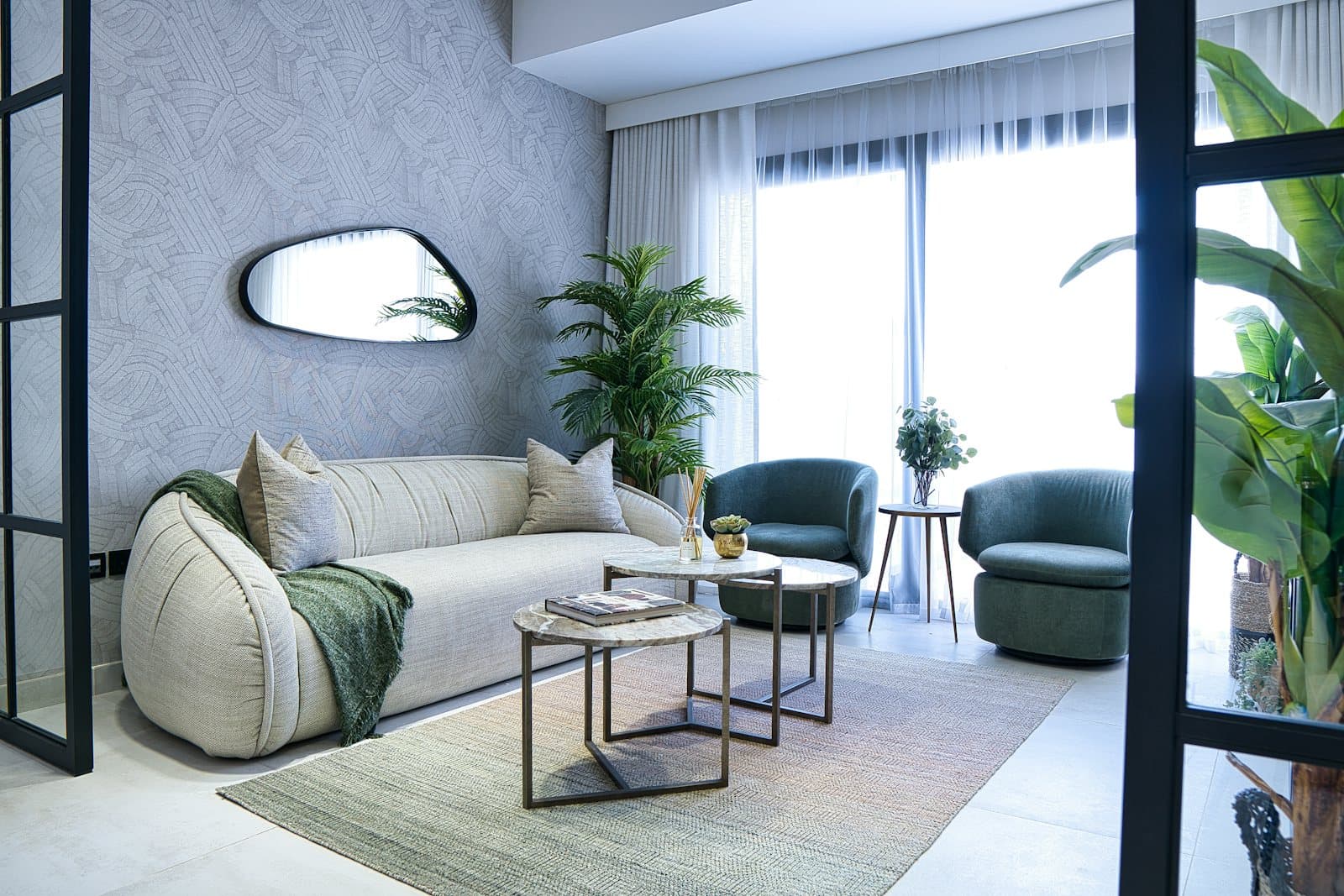
To rent your Dubai property to short-stay guests, the unit needs a holiday home permit from the Department of Economy and Tourism (DET), and whoever runs it, you or a licensed operator, must be registered on DET's Holiday Homes system. As of October 2026, registration costs AED 1,520 and each unit's permit costs AED 300 per bedroom plus AED 70 in fixed fees. Your guests then pay a Tourism Dirham on every night they stay, which you collect and pass to DET.
The rules come from Decree No. 41 of 2013, which regulates holiday homes and still uses DET's former name, the Department of Tourism and Commerce Marketing (DTCM), and from DET's guide to leasing out holiday homes. They apply across Dubai, including free zones such as the Dubai International Financial Centre. For the purchase itself, see our practical guide to buying property in Dubai. This is general information, not legal, tax or investment advice.
Check these before you buy a unit to let
A permit is not automatic, and some units can never get one. Check these points before you commit to a unit for holiday letting.
- The title deed must show the right use. Apartments need a residential title deed. Villas inside a gated community can be residential or commercial, and standalone villas need a commercial deed, or a farm deed in Hatta only.
- Hotel rooms and hotel apartments are excluded.
- The sale contract can rule it out. DET will not issue a permit for a unit whose sale and purchase agreement explicitly bans holiday home use, and it cancels permits issued on wrong information.
- The developer may need to agree. DET asks for a no objection certificate from the developer where one applies.
- The unit must meet DET's standards. Holiday homes need SIRA-approved smart locks connected to the keyless system, and an insurance policy from an insurer licensed in Dubai that covers damage suffered by guests for the whole term of the licence.
Once a unit has a permit, building and community managers must let the licensee and guests in without obstruction. They may view guests' passports or IDs at check-in, and they take complaints to DET rather than blocking access.
If you have not bought yet, our guide to freehold areas in Dubai explains where you can own, and our breakdown of the full cost of buying property in Dubai covers the purchase fees that come before any permit.
How to get a permit, step by step
- Register on DET's Holiday Homes system. An individual owner registers in their own name, which must match the title deed. An operator registers its company, whose trade licence must include the Vacation Homes Rental activity. The registration fee is AED 1,520 (as of October 2026), and DET lists no renewal fee for it.
- Add the unit. Enter the DEWA premise number, not the account number, and upload the title deed or DLD-approved sale agreement, the developer NOC if one applies, a current DEWA bill and the owner's passport or Emirates ID. If an operator manages the unit, it also uploads a property management letter signed by the owner on DET's template, and the permit dates must match that letter.
- Classify the unit. You self-classify it as Standard or Deluxe against DET's checklist, which sets the Tourism Dirham rate. Inspectors visit, and anything that falls short must be fixed within two weeks of a warning.
- Pay the permit fee. AED 300 per bedroom, AED 50 for the classification certificate and AED 20 in knowledge and innovation fees. DET states the permit fee is up to AED 1,200 per holiday home a year.
- Put up the paperwork. Display the permit in the unit. Print the unit's QR code from the system as a 5 cm laminated sticker and fix it under the DEWA plaque outside the front door. Guests, neighbours and building management can scan it to send DET feedback or complaints.
- Renew on time. Permits do not renew automatically, and DET closes a holiday home whose permit or licence lapses.
Running it day to day
DET inspects, and its guide sets out the operating rules in detail. These are the ones owners most need to plan for:
- Check every guest in and out on DET's Holiday Homes 2.0 system within three hours of their arrival, after checking their documents.
- Charge the Tourism Dirham for each bedroom of an occupied unit, every night: AED 10 for a Standard unit and AED 15 for a Deluxe one. A maid's room counts as a bedroom, longer stays are charged for the first 30 nights only, and free promotional stays are still charged.
- Show the fee on the guest's invoice as a separate line called "Tourism Dirham", and pay DET by the 15th of the following month.
- Let the unit as a whole, never by the room or bed space, and do not charge guests extra for electricity or water.
- Give guests written terms in Arabic and English, a 24-hour contact number and the house rules, which include no visitors between midnight and 8am, no parties and quiet hours from 10pm to 8am.
Self-managing or using a licensed operator?
| What changes | Managing it yourself | Using a licensed operator |
|---|---|---|
| Registration | In your own name, matching the title deed | The operator's company, with a Vacation Homes Rental licence |
| How many units | Up to eight | More than eight needs a company licence or an operator |
| Daily duties | You check guests in within three hours and answer a 24-hour line | The operator does it |
| Contract | Not needed | Up to one year; the permit cannot run beyond it |
The operator contract has to cover how income is split, who pays for the permit, maintenance and insurance, whether and when you can use the unit yourself, and how it is handed back at the end.
Say you own a two-bedroom apartment in Dubai and live in Mumbai. Self-managing means someone has to meet each guest, register them on DET's system within three hours and answer the phone at three in the morning. Unless you have a reliable person on the ground, an operator is the realistic choice, and the real decision is which contract terms you accept.
Fines and how they escalate
Decree No. 41 of 2013 allows fines of AED 200 to AED 20,000 per violation, doubled for a repeat within a year up to AED 100,000. DET can also suspend the activity for up to six months or cancel the licence. Examples from DET's schedule, as of October 2026:
- Letting holiday homes without a licence: AED 5,000.
- Letting a unit without DET's prior approval: AED 2,000.
- No valid insurance policy: AED 2,000.
- Paying the Tourism Dirham late: 10% of the unpaid amount, at least AED 1,000.
- Letting by the room or bed space: AED 500.
- Operating while suspended by DET: AED 20,000.
Rental income can also have VAT and tax consequences, depending on your circumstances and how much you let. Our guide to VAT registration in the UAE explains the thresholds, and a registered tax agent can review your position before you start.
If you are choosing a unit with holiday letting in mind, our real estate team can check the title deed type, the sale contract wording and the building's position before you commit.
Sources
- Dubai Department of Economy and Tourism: register to operate holiday homes
- Dubai Department of Economy and Tourism: new holiday homes permit issuance
- Dubai Department of Economy and Tourism: Leasing Out Holiday Homes user guide (PDF)
- Dubai Legal Portal: Decree No. 41 of 2013 regulating holiday homes
Frequently asked questions
Can a tenant rent out a Dubai apartment as a holiday home?
How long can a holiday home guest stay?
Can I use the property myself if an operator manages it?
What happens if I stop letting the unit?
Found this useful? Pass it on.