

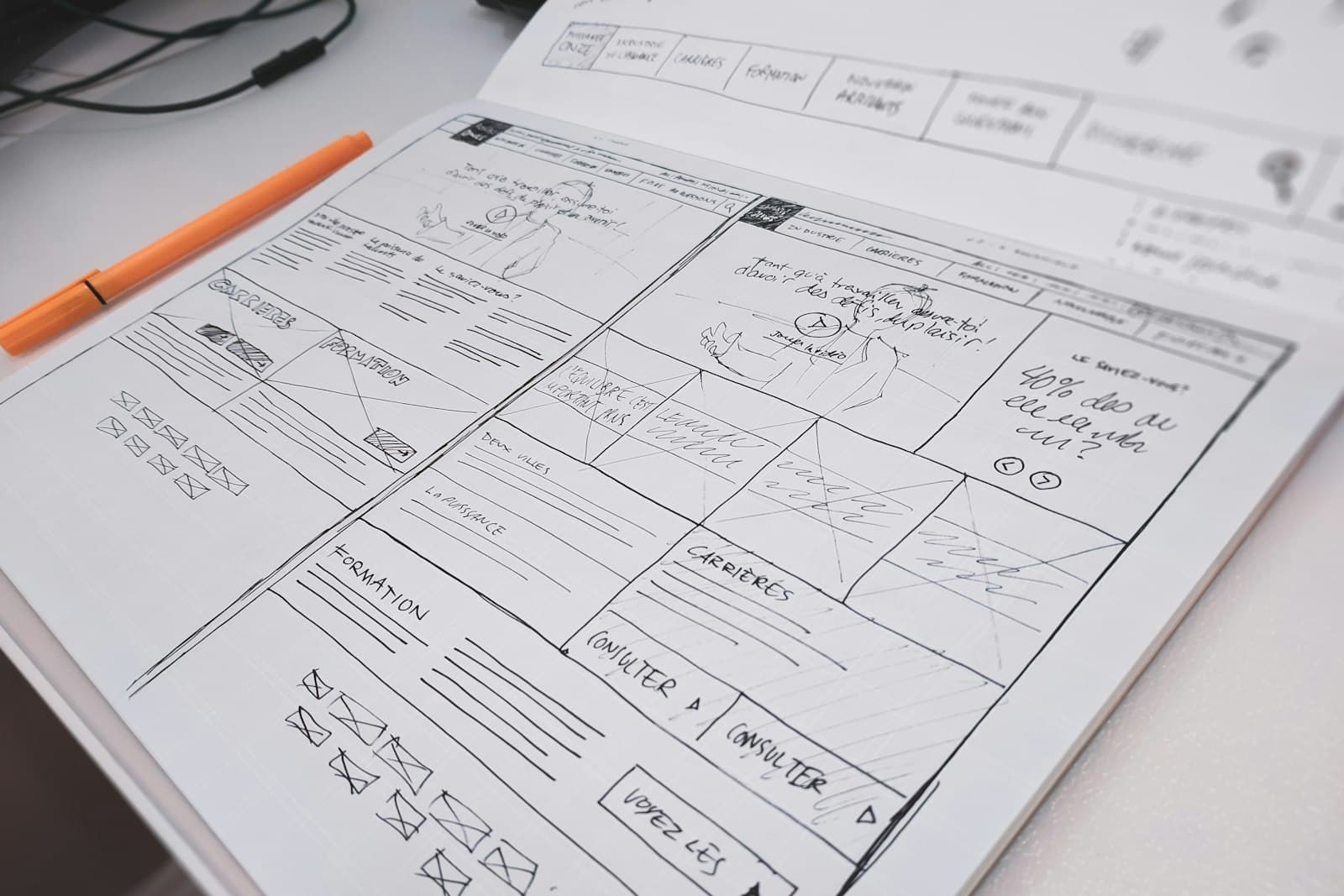
Good landing page design for Dubai and wider UAE campaigns is mostly subtraction: one audience, one offer, one action, on a page that loads quickly on a phone. The page has to continue the conversation the ad started, prove that you can deliver, and make the next step easy, whether that step is a form, a WhatsApp chat or a call. The ad platforms judge the page as well, so their rules belong in the brief from the start.
This guide works through a lead page from top to bottom, then covers speed, platform rules, tracking, consent and testing. It mentions UAE rules on data and marketing calls; treat those parts as general information, not legal advice.
What makes a high-converting lead generation landing page?
A strong lead page answers the visitor's questions in the order they come up:
- A headline that matches the ad. The same promise, in the same words where possible.
- Who it's for. "For villa owners in Dubai" filters out the wrong enquiries before they cost you time.
- The offer. A free site visit, a fixed-price package, a consultation, a quote within a stated time. Say what happens after someone gets in touch.
- Proof. Reviews with names, project photos, your trade licence number, a real address and accreditations that can be checked.
- How it works. Three or four steps, so the commitment feels small.
- Objections. Price ranges if you can share them, timings, the areas you cover, payment terms.
- The action, repeated. The same button after each major section, and a sticky one on mobile.
- A footer that builds trust. Company name, licence details and a privacy notice.
Notice what is missing: the full site menu, the company history and every other service you offer. Each of those gives the visitor somewhere else to go.
Match the message to the ad
Google's advice for advertisers is direct: choose a landing page that closely matches your ad and keywords, and make the page mirror the call to action in the ad. Meta's Advertising Standards go further and require the products and services promoted in an ad to match those on the landing page.
Say you run a pest control company advertising same-day bed bug treatment. That ad should land on a page about bed bug treatment with same-day availability near the top, not on a home page listing termites, cockroaches and annual contracts. If you run five campaign themes, you need five pages, or one template whose headline, offer and proof change for each campaign.
Google Ads rates landing page experience, meaning how relevant and useful your page is to people who click the ad, as one of three parts of Quality Score, alongside expected click-through rate and ad relevance. Google describes Quality Score as a diagnostic tool rather than an input in the ad auction, but a below-average landing page rating is still a clear sign the page needs work. Our guide to Google Ads for lead generation covers the campaign side.
Form, WhatsApp or a call?
| Action | Works best when | Watch out for |
|---|---|---|
| Short form | You need details to quote, or leads arrive out of hours | Ask only what you need to reply well |
| WhatsApp chat | People have questions before they commit, and you reply fast | Chats are hard to track unless you tag them |
| Phone call | The service is urgent or high-value | Missed calls are lost leads; marketing calls have rules |
You can offer all three and make one of them the main action. On this site, a WhatsApp button sits in the bottom corner of every page in both languages, because that is where people look for it. If the enquiry form fails to send, the error message offers WhatsApp and a phone number instead of a dead end.
The platforms also let people skip the page. Google Ads lead forms collect details inside the ad on Search and Performance Max campaigns for eligible advertisers, and they require a link to your privacy policy. Meta's click-to-WhatsApp ads open a chat with your business directly. Both put the weight on fast, consistent follow-up, the subject of turning WhatsApp chats into leads.
If your team phones leads, the UAE's telemarketing rules apply to marketing calls. Cabinet Resolution No. 56 of 2024 limits them to between 9 am and 6 pm, requires local numbers registered under your company's licence, and bars calling a consumer back after they refuse on the first call.
Mobile-first landing page design
- Put the headline, offer and main button on the first screen of a phone, not below a large photo.
- Make contact one tap away. Phone numbers should be tel: links, and a phone field should open the number keypad.
- Keep sticky buttons out of the way. Ours clears the iPhone home bar and hides while the mobile menu is open, so it never covers anything.
- Skip the pop-ups. Google's advice for landing pages is to avoid cluttering the page with too many ads or pop-ups and to put important information towards the top.
- Cut heavy media. Sliders and background videos delay the first screen and rarely carry the message.
Arabic pages for Arabic campaigns
If you run ads in Arabic, send them to an Arabic page, not the English one. That means a right-to-left layout, copy written for Arabic readers rather than machine-translated, Arabic form labels and error messages, and phone and email fields kept left to right so numbers don't scramble. Keep the offer identical in both languages, or your lead data becomes hard to compare. Our guide to bilingual Arabic and English websites covers the layout work.
Speed and the ad platforms' rules
Use Google's Core Web Vitals as design targets: Largest Contentful Paint within 2.5 seconds, Interaction to Next Paint within 200 milliseconds and Cumulative Layout Shift of 0.1 or less, at the 75th percentile of page loads. A landing page has fewer excuses than a full site, because it carries less.
Google's Destination requirements policy disapproves ads whose pages don't work, can't be crawled, aren't available in the targeted location, have insufficient original content, or show unverified or unacceptable phone numbers. Check the final URL on a phone in the UAE before launch, and again after any change to the site.
Meta reviews landing pages as part of ad review. Its guidance on ad quality tells advertisers not to use low-quality attributes in post-click experiences, including landing pages, and notes that ads with a lower quality ranking tend to cost more.
Tracking and consent
Decide before launch what counts as a lead, and track each action separately: form submissions, WhatsApp clicks and calls. In Google Analytics 4 these are key events, the term GA4 now uses for what it once called conversions, and you can create Google Ads conversions from them. On Meta, the Pixel and the Conversions API do the same job. Our conversion tracking guide walks through the setup.
Under the PDPL, consent is the default legal basis for processing personal data, and online identifiers count as personal data, so the cautious approach is to load analytics and ad tags only after a visitor agrees. On this site, Google Analytics loads only after a visitor accepts analytics cookies, and only on the live domain. Clicks on WhatsApp, phone and email links are then recorded as one contact event, with the method attached. Consent leaves gaps in the numbers, so reconcile the platforms' figures against the leads in your CRM.
On the form, say what happens next and link your privacy notice. If you want to send marketing later, ask with a separate box the visitor ticks themselves: consent under the PDPL must be specific and clear, and a pre-ticked box is hard to defend. The detail is in what the UAE data protection law requires.
Test one change at a time
Google Optimize was switched off on 30 September 2023, so landing page tests now run in the ad platforms or in third-party tools. In Google Ads, custom experiments split a campaign's traffic and are commonly used to test landing pages. Meta's A/B tests divide the audience so that nobody sees both versions, and Meta advises against testing informally by switching ad sets on and off.
Test the big things first: the offer, the headline, a form against WhatsApp. Judge the result by qualified leads in your CRM, not form fills, and let each test collect enough leads to mean something before you call it. Our guide to conversion rate optimisation covers how to prioritise.
If you want landing pages built and wired into your campaigns, our website development team designs them and our performance marketing team runs the ads that feed them.
Sources
- Google Ads Help: Optimise your ads and landing pages
- Google Ads Help: About Quality Score
- Google Advertising Policies Help: Destination requirements
- Meta Transparency Center: Introduction to the Advertising Standards
- Meta Business Help Centre: About ad quality
- Ministry of Economy and Tourism: consumer protection and commercial control legislation
Frequently asked questions
Should a landing page include the full site menu?
How many fields should a lead form have?
Can one landing page serve both Google Ads and Meta Ads?
How long should a landing page be?
Found this useful? Pass it on.